.

Puzzles To Remember

PUZZLES TO REMEMBER is a 501(c)3 organization that provides puzzles to nursing homes, veterans facilities, and other facilities that care for Alzheimer's and dementia patients. Dr. Max Wallack founded Puzzles To Remember in 2008, and continues to act as an advisor and mentor. Hailey Richman is the Executive Director of PuzzlesToRemember. Since 2011, Hailey has been distributing puzzles to nursing facilities around the globe. Hailey is also the founder of KidCaregivers.com, where she provides advice for children dealing with dementia in their family members. Hailey has begun an international program called PuzzleTime which involves pairing youth members with people with Alzheimer's for an hour of shared jigsaw puzzle solving. Dr. Max Wallack serves as a mentor to the KidCaregivers program.

If you have puzzles that you would like to donate, please contact us at Puzzles2Remember@gmail.com and we will find a location near you where you can bring your puzzles. We can also provide you with a donation letter so that you can claim the value of your puzzles as a tax deduction.

To see a short video from WCVB Ch. 5 "BOSTON STRONG" about Max's efforts on behalf of Alzheimer's patients, click here.

To see a short video about Hailey's Puzzle Time Program, click here.

Sunday, October 27, 2013

Alzheimer's Facilities and Memory Cafes Have Been Supplied with 26,000 PUzzles

Share

By Max Wallack
Puzzles to Remember

As of today, PuzzlesToRemember has distributed over 26,000 jigsaw puzzles to Alzheimer's Facilities, Adult Day Cares, and Memory Cafes.

These puzzles have been distributed to 2149 facilities around the world. They include facilities in every state, plus Canada, Aruba, Australia, Colombia, England, France, Mexico, Poland, Singapore, and South Africa.

I am happy that these include about 55 Memory Cafes. I am a huge advocate of Memory Cafes. I believe they are immensely helpful to both those with Alzheimer's disease and their care partners.

Here is a link to many memory cafes on the Third Age Services website: http://tinyurl.com/kq9n6xg


PuzzlesToRemember recently received a grant from Youth Service America:

"The ABC Summer of Service Awards, in collaboration with Disney Friends for Change, is an initiative that inspires kids and their families to make a lasting, positive change by helping people, communities, and the planet." 

This will enable me to provide additional puzzles for memory cafes and Alzheimer's facilities. If you know of such a facility that would like to receive, at no cost, two of the Springbok PuzzlesToRemember, please email me at PuzzlesToRemember@gmail.com. •


Max Wallack is a student at Boston University and a Research Intern in the Molecular Psychiatry and Aging Laboratory in the Department of Pharmacology and Experimental Therapeutics at Boston University School of Medicine.  His great grandmother, Gertrude, suffered from Alzheimer's disease. Max is the founder of  PUZZLES TO REMEMBER. PTR is a project that provides puzzles to nursing homes and veterans institutions that care for Alzheimer's and dementia patients.
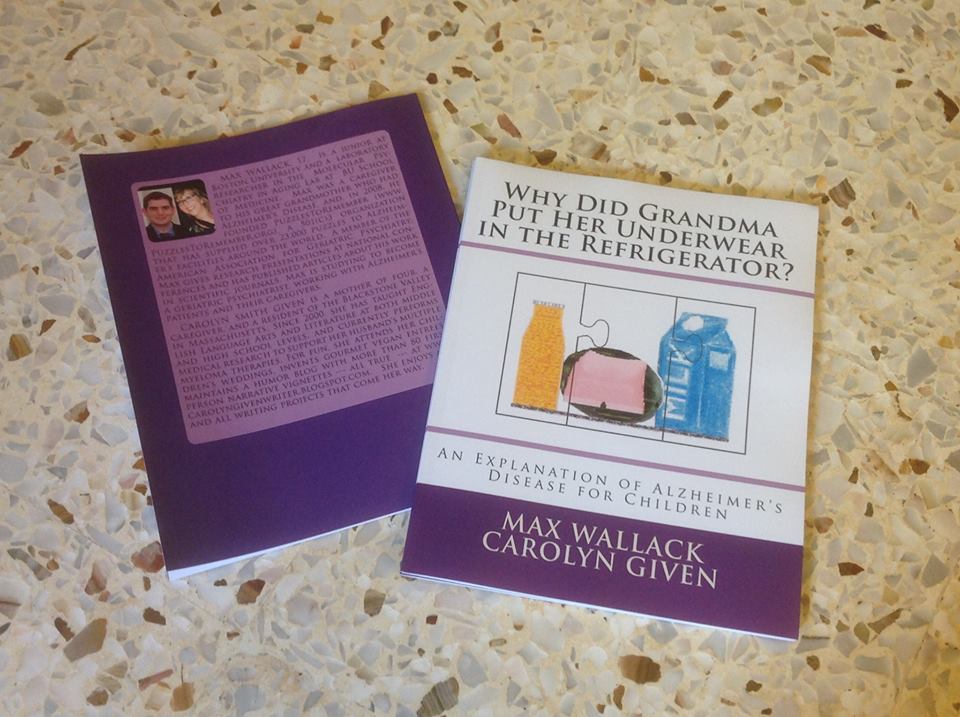
He is also coauthor of "Why Did Grandma Put Her Underwear in the Refrigerator? An Explanation of Alzheimer's Disease for Children."


Read More....

Saturday, October 19, 2013

"A Pocket Guide for the Alzheimer's Caregiver" by Daniel C. Potts, M.D. and Ellen Woodward Potts

Share

By Max Wallack
Puzzles to Remember

A few weeks ago I received A Pocket Guide for the Alzheimer’s Caregiver by Daniel C. Potts, M.D. and Ellen Woodward Potts. I finally had the opportunity to read this wonderful book.

It is a superb introductory manual that explains Alzheimer’s disease to care partners and families who are learning that their loved one has this disease.

These new care partners have so many questions.

There are many questions that care partners may be reluctant or embarrassed to ask. There may be questions about the future trajectory of the disease that are too difficult to ask. There may be financial questions that feel to selfish to ask.

Yet, these care partners desperately need answers.

In A Pocket Guide for the Alzheimer’s Caregiver, the Dr. and Mrs. Potts provide answers to these questions, and they provide them in an organized, meaningful, kindly, and helpful manner.

The book is divided into 24 chapters, each explaining and giving advice for such common problems as wandering, paranoia, eating issues, sleep issues, bathroom issues, violence, and how to create a living space most conducive to the health and safety issues of an Alzheimer’s patient. Each of the 24 chapters is then summarized at the end.

The book is a manual that every care partner should have available. It is not something that just gets read once. It is a book that can be referred to over and over again, providing information in times of need.

In this helpful guide, Dr. and Mrs. Potts never stray from their conviction that the Alzheimer’s patient is NOT an empty shell who is no longer there.

Their advice is to

“begin training yourself to have an attitude of hope --- to learn to love and appreciate your loved one as he is in his ‘now’. This ‘now’ will be a moving target: he will have good days and bad days, and his overall condition will slowly decline. However, this person is still the one you love, and deep down, he still has gifts and talents and a life story and the ability to give and receive love and affection. Learn to look past loss and see opportunity – opportunity to experience life with you loved on in a different way.”

This book can help the care partner achieve an attitude of hope.


Max Wallack is a student at Boston University and a Research Intern in the Molecular Psychiatry and Aging Laboratory in the Department of Pharmacology and Experimental Therapeutics at Boston University School of Medicine.  His great grandmother, Gertrude, suffered from Alzheimer's disease. Max is the founder of  PUZZLES TO REMEMBER. PTR is a project that provides puzzles to nursing homes and veterans institutions that care for Alzheimer's and dementia patients. He is also coauthor of "Why Did Grandma Put Her Underwear in the Refrigerator?  An Explanation of Alzheimer's Disease for Children".

Read More....

Tuesday, October 8, 2013

A 17-year-old does combat with Alzheimer’s disease

Share

The following article appeared 10/8/2013 on www.agelessonline.net. It was written by Eleanor Yap

8 October 2013
Thanks to his experience with his great-grandmother, one US teenager is determined to do whatever he can to help those with the disease.
BY: Eleanor Yap
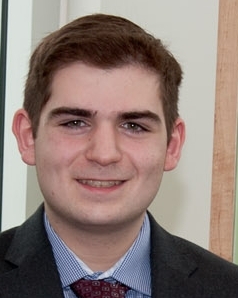
Max Wallack (left) was six when he came face-to-face with Alzheimer’s disease. His great-grandmother Gertrude was staying with him and his family in the US and her condition slowly worsened. It was this experience that set him on a path to do whatever he can for those with Alzheimer’s disease.

He not only has started his own non-profit called Puzzles To Remember at the age of 11, he has written a children’s book this year on the disease where half of the proceeds go to Alzheimer’s research, and he continues interning at an Alzheimer’s disease centre doing research. His work with the disease is timely, as more than 35 million people around the world live with dementia, including the common form, Alzheimer’s disease, and this number is expected to triple by 2050.
Ageless Online chats with this inspiring 17-year-old about his “Great Grams” and why it is important not to sit around and do nothing, and engage in “fun”:

Can you share the “eye-opening” experience with your great-grandmother and any unforgettable moments?
Probably at the ages of six and seven, I mostly saw her condition worsen, as she needed extra help. At the time, she was around 90 years old. I would stay with her and help her cross the street or maybe hand her things at home. By the time I was eight, she had become very paranoid. 
One of my earliest memories was driving to my Tae Kwon Do lesson. My mom and grandmother were in the front seat, and I was in the back with Great Grams. Great Grams became very hostile and said that my mom and grandmother were talking about her, which they were not.
There were also some very upsetting situations when Great Grams escaped from the house at night or early in the morning, and we had to notify the police. She felt the compulsion to run. On some level, she understood her situation, and she was trying to run away from her illness and toward the life she remembered from when she was much younger.
About eight months before Great Grams’ death, we took her on vacation with us to Hawaii. Most of the time there, she seemed to enjoy herself. However, on one occasion, she jumped up out of her wheelchair, ran to a security guard, and told him we were trying to kill her. Apparently, once someone says that, they are required to call the police, so my family and I got to meet quite a few of the Honolulu Police Department!


Max noticed that Alzheimer's patients working with jigsaw puzzles seemed calmer and less agitated than other patients.
It was during this time you discovered the benefits of jigsaw puzzles. Can you share more and how that lead to Puzzles To Remember?
During the last six months of her life, Great Grams was in and out of various hospitals and nursing homes, mostly as a result of the frequent urinary tract infections that come with increasing incontinence. When visiting her in these facilities, I noticed that patients working on jigsaw puzzles seemed calmer and less agitated than other patients. I tried to read about this and I discovered that remaining mentally-active could help slow down the progression of Alzheimer’s disease.
Also, creative activities like arts and music, are controlled by the part of the brain that is one of the very last affected by this disease. So, after Great Grams’ death in 2006, I decided to collect jigsaw puzzles and donate them to the facilities that had cared for Great Grams. 
I contacted various puzzle manufacturers and I set up collection bins for gently used puzzles. Soon, donations of puzzles starting pouring in. After I had donated to the facilities that had cared for Great Grams, I started donating to all the facilities in eastern Massachusetts, where I live. Soon, I realised that I needed a source of income in order to be able to ship the puzzles to facilities further away, so I decided to become a non-profit organisation, that way I could accept tax-free donations. 
Shortly thereafter, I realised that there was a dearth of puzzles that were best suited to the needs of Alzheimer’s patients. Most puzzles of few pieces and large-piece sizes have images meant for children, and adults with Alzheimer’s are still adults who don’t enjoy puzzles with childish themes. I then contacted Springbok Puzzles, the leading puzzle manufacturer in the US, and asked them if they could make puzzles with fewer pieces, large-sized pieces, bright colours, and memory-provoking themes. That’s how the Springbok Puzzles To Remember came into existence. 
For the past three years, I have worked together with Springbok to produce new images for their Alzheimer’s puzzles. I accept no cash royalties for my work. Instead, each year, Springbok gives me an “allotment” of puzzles that I can direct to have them send to any facility of my choosing. I have since distributed over 15,500 puzzles to over 2,100 nursing facilities, adult daycare centres, veterans’ facilities and memory cafés (casual social meeting venues for those with progressive memory or cognitive impairment and their caregivers, family and friends) around the world.
Last year, new research was done at Rush University School of Medicine, US, showing that remaining cognitively active with things like puzzles can postpone the point at which an Alzheimer’s patient is no longer able to function in society. It might not affect their longevity, but it can affect their quality of life for a substantial time.

And now at 17, you are still doing work that involves Alzheimer’s disease where I understand you are not taking a Summer Break but interning in the Laboratory of Molecular Psychiatry in Aging at Boston University’s Alzheimer’s Disease Center. Can you share the cutting-edge research you are doing there?
Wallack with his mentor, Dr Wendy Qiu, who heads the Laboratory of Molecular Psychiatry in Aging at Boston University’s Alzheimer’s Disease Center. (Photo by Vernon Doucette)
I love my work in the Molecular Psychiatry and Aging Laboratory. I learn more there than anyway else. I have been working there for almost three years. I work up to 20 hours per week during the school year, and full-time during summers. I enjoy the teamwork there. No one in our lab feels above carrying boxes around and everyone there respects the opinions of others, even the opinions of a lowly intern like me. It is an environment where I can thrive. 
Recently, a paper I co-authored was published in the “Journal of Alzheimer’s Disease”.  It was a study that showed that ACE inhibitors like lisinopryl can be beneficial to Alzheimer’s patients, but only if they are of the APOe3- or APOe2-genotype. They are ineffective to those of the APOe4-genotype. 
Currently, I am working on a very exciting project that we are writing up for a publication. It involves administering a naturally-occurring hormone, which has already been approved for use in diabetics. Results are showing that this hormone is capable of clearing Abeta (amyloid-beta) out of the brain and into the bloodstream. We have conducted these studies in mice, and their ability to perform on maze tests increase after the Abeta is cleared out. We have just begun testing this drug in humans. 
I hope to continue working in the lab until I graduate from Boston University, so, at least until Summer 2015.

What field of study are you doing at BU?
I am a neuroscience major. I definitely want to go to medical school. My plan is to become a geriatric psychiatrist.

And you have written a book too this year! Tell me about it and how much it mirrors your own life.
Max's book for children.

“Why Did Grandma Put Her Underwear in the Refrigerator? An Explanation of Alzheimer’s Disease for Children” is something that I had been writing in my head for many years. Then, one day I asked my former high school English teacher if she would be my co-author. She is gifted at humour, and I felt she could keep the book from becoming too dark and sad. Within a few hours, I wrote it and sent it to her but of course, the book underwent several revisions before the final product was published.
The book is really based on three things. Some of it, like the police returning Grandma home, are things I experienced repeatedly. Other things, like Julie doing puzzles with Grandma and feeding Grandma, are actually based on a little girl who is six years old and lives in New York City. Her grandmother has Alzheimer’s disease, and I correspond frequently with the family, whom I first “met” through my writing on the AlzheimersReadingRoom.com. The third aspect is taken from my own readings and research. For instance, the use of the red plate, which really does make a difference in feeding of dementia patients.

What keeps you going?
§  Making a difference in the lives of Alzheimer’s patients and their caregivers.
§  Helping ward off the oncoming worldwide tsunami of Alzheimer’s disease.
§  Working together with a team of people who are upbeat and enjoy their work.
§  Spending time with my good friends who support and respect my efforts.
§  Supporting my own friends, many of whom are deeply involved in community service of various forms.
§  Thinking about new ways to make a difference.

What is next for you?
I am currently writing up several papers for publication, and I am applying for a grant.  It would be the first grant on which I would be listed as a “principal investigator”. In the Spring, I will begin applying to medical schools.

If you could get three messages out to people about Alzheimer’s, what would they be?
§  In our ageing society, Alzheimer’s, in addition to its devastating effects on individuals and families, represents the single biggest threat to economies. We need to invest in treatments and/or cures NOW.
§  The Alzheimer’s patient has not changed into a different person. They are “still there”. Their means of interacting may have changed. It’s important to find ways to still communicate with these patients.
§  Hiding this disease from family and friends only serves to isolate patients and their caregivers. We need to be more public about this problem. I think memory cafés are one of the best ways to avoid isolation.

You must be the youngest ever dedicated to doing work connected to Alzheimer’s disease. Why do this work when you could just focus on being a regular kid at your age taking up hobbies, hitting the beach in the Summer and doing other things?
My friends know that I spend a lot of time having conventional “fun”.  I play a lot of pool and ping-pong, and I spend way too much time on Facebook and playing video games.
The difference may be that I consider my work combatting Alzheimer’s disease to also be “fun”. I guess I enjoy many different kinds of fun and I think everyone ought to be able to enjoy whatever harmless activity is fun to them.

If that one day came when there is a cure for Alzheimer’s disease, what would you do? When do you think that day will come?
I think it is likely that we are approaching a time when Alzheimer’s will be treatable. Even postponing the disease by five or 10 years would make a very huge difference, and I think this goal is achievable. Though I think we may be a bit further away from a “cure”. 

Any inspiring words for other youths on them doing ground-up initiatives like yours that help the community?
My advice is to choose something you are very passionate about, and begin by doing just some small things to help others. The feedback of seeing the positive effects of one’s work on the lives of others is so powerful that it will spur you on to continue making a difference. Don’t try to start by constructing a huge project and plan. Start small and let your passion lead your way. 


Read More....

Donation of Springbok PuzzlesToRemember to the Leeza Gibbons Memory Foundation

Share

By Max Wallack
Puzzles to Remember

On September 23, the Caregiver Action Network presented Leeza Gibbons and Elizabeth Dole with the Hands on Help Award.

Leeza Gibbons was honored for her work with the Leeza Gibbons Memory Foundation, and she was presented with 150 Springbok PuzzlesToRemember for use with Alzheimer's and Dementia patients.


Max Wallack is a student at Boston University and a Research Intern in the Molecular Psychiatry and Aging Laboratory in the Department of Pharmacology and Experimental Therapeutics at Boston University School of Medicine.  His great grandmother, Gertrude, suffered from Alzheimer's disease. Max is the founder of  PUZZLES TO REMEMBER. PTR is a project that provides puzzles to nursing homes and veterans institutions that care for Alzheimer's and dementia patients. Max is also a coauthor of "Why Did Grandma Put Her Underwear in the Refrigerator?  An Explanation of Alzheimer's Disease for Children."

Read More....

Saturday, September 7, 2013

A Review of “Why Did Grandma Put Her Underwear in the Refrigerator? An Explanation of Alzheimer’s Disease for Children”

Share

By Max Wallack
Puzzles to Remember

Yesterday, I received this review from Carrie, whose family owns KDYZ International in Singapore.  Their company sells toys for children; it also has a wonderful and innovative branch called CARE, Creative Aids and Resources for the Elderly, that sells a variety of toys and tools to aid the elderly, including Alzheimer’s and dementia patients.

Here is Carrie's review:

“I read the book three times between 7 am 12 noon today ( in between distractions of breakfast and phone calls.) Twice I read to myself and once to my son (14) and daughter (12). They love them book; they said it's very inspiring and it must be written with love.

And I love it - I also find it even better when I read it out loud!

Next week, I shall read to some preschool children and send you photos and their reactions.

I like that the language is simple, the font is big and clean, with not too many words  on one page; illustrations are also relatable.
(The school bus, the messy room with toys)

I like that you interjected some humor (the toothbrush in the toaster), and at the same time , the child is also allowed to feel sad ( Halloween incident) --- it is a subtle and good way to let the child know that it can be a roller coaster journey.

I like that it provides hope (research) and also inspires the child to contribute their individual best to find a cure.

I like that you give simple practical solutions (red plate, door bell) --- I can even create a lesson plan here for kindergarten class.

I like that you explain the disease in simple terms and illustrations (healthy cell/cell with Alzheimer's disease)..

Love it love it.

Well done!

Carrie”


and this morning:

"I just thought about it this morning when i woke up - every school library should have at least one copy if not more!!!!"

Carrie ordered 40 copies for distribution in Singapore!


Max Wallack is a student at Boston University and a Research Intern in the Molecular Psychiatry and Aging Laboratory in the Department of Pharmacology and Experimental Therapeutics at Boston University School of Medicine.  His great grandmother, Gertrude, suffered from Alzheimer's disease. Max is the founder of  PUZZLES TO REMEMBER. PTR is a project that provides puzzles to nursing homes and veterans institutions that care for Alzheimer's and dementia patients. Max is also a coauthor of "Why Did Grandma Put Her Underwear in the Refrigerator? An Explanation of Alzheimer's Disease for Children."


Read More....

Sunday, September 1, 2013

25,000 Puzzles Have Been Provided to Alzheimer's Patients by PuzzlesToRemember

Share

By Max Wallack
Puzzles to Remember

 September 1 marks the beginning of Alzheimer's month.

 In honor of this date, I have packed 8 large boxes of puzzles to be shipped to nursing facilities this week. I have also found homes for puzzles in an additional 14 facilities in the past week. Two of these were in Australia!

As of today, PuzzlesToRemember has distributed over 25,000 puzzles, at no cost, to nursing facilities. In addition, many, many Springbok PuzzlesToRemember, puzzles that I helped develop, have been sold to caregivers for use at home with their family members.

This November, at least one new Springbok PuzzleToRemember will be available. For some time, people have been asking for a puzzle more suitable for males. In November, we will be making available an Alzheimer's puzzle of sailboats. Other new puzzles may be produced, also.
 •

Max Wallack is a student at Boston University and a Research Intern in the Molecular Psychiatry and Aging Laboratory in the Department of Pharmacology and Experimental Therapeutics at Boston University School of Medicine.  His great grandmother, Gertrude, suffered from Alzheimer's disease. Max is the founder of  PUZZLES TO REMEMBER. PTR is a project that provides puzzles to nursing homes and veterans institutions that care for Alzheimer's and dementia patients. Max is also an author of "Why Did Grandma Put Her Underwear in the Refrigerator? An Explanation of Alzheimer's Disease For Children."


Read More....

Wednesday, August 14, 2013

Interview on Lori La Bey's Blog Talk Radio Show

Share

By Max Wallack
Puzzles to Remember

This morning I had the wonderful experience of being on Lori La Bey's Blog Talk Radio Show. Lori is obviously a very gifted interviewer and very apt at putting her guests immediately at ease.

I shared this experience with my coauthor, Carolyn Given, and also with Emma Richman, a New York City teacher who has dealt with Alzheimer's disease in her family members. We also had a surprise and welcome call-in from Bob DeMarco, founder of the AlzheimersReadingRoom.com.

Through a lively and interactive conversation, we were able to discuss many aspects of our book "Why Did Grandma Put Her Underwear in the Refrigerator? An Explanation of Alzheimer's Disease for Children." We even discussed the possibility of a sequel for a slightly older audience.

I also had a chance to talk about my research in the Molecular Psychiatry and Aging Laboratory, as well as my work with PuzzlesToRemember. It was a great experience. You can listen to the show below:


Max Wallack is a student at Boston University and a Research Intern in the Molecular Psychiatry and Aging Laboratory in the Department of Pharmacology and Experimental Therapeutics at Boston University School of Medicine.  His great grandmother, Gertrude, suffered from Alzheimer's disease. Max is the founder of  PUZZLES TO REMEMBER. PTR is a project that provides puzzles to nursing homes and veterans institutions that care for Alzheimer's and dementia patients.

Read More....

Sunday, August 4, 2013

Fan Mail for "Why Did Granma Put Her Underwear in the Refrigerator? An Explanation of Alzheimer's Disease for Children

Share

By Max Wallack
Puzzles to Remember
 In Saturday's mail, I received our book's first fan mail from it's foremost intended audience:

I hope this book can inspire a new generation of young caregivers to decide to become scientists.

Max Wallack is a student at Boston University and a Research Intern in the Molecular Psychiatry and Aging Laboratory in the Department of Pharmacology and Experimental Therapeutics at Boston University School of Medicine.  His great grandmother, Gertrude, suffered from Alzheimer's disease. Max is the founder of  PUZZLES TO REMEMBER. PTR is a project that provides puzzles to nursing homes and veterans institutions that care for Alzheimer's and dementia patients.

Read More....

Monday, July 22, 2013

Two Reviews of “Why did Grandma Put Her Underwear In the Refrigerator? A Book Explaining Alzheimer’s Disease to Children”

Share

By Max Wallack
Puzzles to Remember


by Cheryl L. Wolf:
"I was very impressed with your book"Why did Grandma Put Her Underwear In The Refrigerator? The story about Julie was very sweet and easy for children to follow.The book shows the different stages such as wandering, fears from every day things, and incontinence. I thought the description about the pitcher and the catcher was a really good example of how "grandma" couldn't receive messages like other people. I also thought it was very realistic for Julie's mother to explained that Alzheimer's Disease is NOT contagious. I am sure many children would be concerned about it . I know I probably would have been concerned as well when I was seven years old.

I would highly recommend this book for any child who has a family member with Alzheimer's Disease. I would think Neurologists and Child Psychologists would agree with me about the importance of this book. I also think that Memory Care Units, Adult Day Cares, and schools should carry a copy of this book to share with families. Any child dealing with Alzheimer's Disease like Julie would benefit from reading this explanation of A.D. Again I just want to reiterate how I think this was a fantastic book for children who have a relative with this horrible disease.This book explains in simple terms and yet does not talk down to children."

by Barry G. Wolf:
"Allow me to congratulate you for an exceptional book, providing Alzheimer's disease from a child's perspective. I believe that your book will prove to be a valuable guide for families to explain the dynamics of Alzheimer's disease. Let me add that your personal commitment to solving this ever-growing health crisis is highly commendable and we look forward to watching your professional credentials and accomplishments escalate over time. You are a wonderful person with an extremely bright future. Best wishes to you and your future goals and dreams."
 •
Max Wallack is a student at Boston University and a Research Intern in the Molecular Psychiatry and Aging Laboratory in the Department of Pharmacology and Experimental Therapeutics at Boston University School of Medicine.  His great grandmother, Gertrude, suffered from Alzheimer's disease. Max is the founder of  PUZZLES TO REMEMBER. PTR is a project that provides puzzles to nursing homes and veterans institutions that care for Alzheimer's and dementia patients.

Read More....

Friday, July 19, 2013

New Book Explaining Alzheimer's Disease to Children is Reviewed by Dr. Robert Santulli, Geriatric Psychiatrist

Share

By Max Wallack

Puzzles to Remember

The new book, Why Did Grandma Put Her Underwear in the Refrigerator? A Book Explaining Alzheimer's Disease to Children, written by Max Wallack and Carolyn Given, has received an excellent review from Dr. Robert Santulli, Geriatric Psychiatrist at the Dartmouth Hitchcock Medical Center.

Dr. Santulli has appraised the book as, "A Terrific New Book For Children."

Here is the content of his review:

"Max Wallack, creator of "Puzzles to Remember", and Carolyn Given have written a new book for young children about Alzheimer's disease. It is clear, well written, with wonderful illustrations. It explains the symptoms of the disease in language that children can understand; shows both the love and occasional frustration and anger that a young child can feel towards a grandmother with the disease, and even talks about the importance of participating clinical trials. I would recommend it highly for any child who must face this disease in a grandparent or other relative. Fifty percent of the book's proceeds will support Alzheimer's research and the care of Alzheimer's patients."

We thank Dr. Santulli for taking his time to review this book, and we hope the book will help many families who are dealing with this disease. You can order the book here:


Max Wallack is a student at Boston University and a Research Intern in the Molecular Psychiatry and Aging Laboratory in the Department of Pharmacology and Experimental Therapeutics at
Boston University School of Medicine.  His great grandmother, Gertrude, suffered from
Alzheimer's disease. Max is the founder of  PUZZLES TO REMEMBER. PTR is a project that provides puzzles to nursing homes and veterans institutions that care for Alzheimer's and dementia patients.


Read More....
PUZZLES TO REMEMBER was founded in 2008 by Max Wallack, in memory of his great-grandmother, Gertrude Finkelstein, who died of Alzheimer's disease in 2007.
Puzzles To Remember is registered in Massachusetts as a public charity. Contributions are welcome, and are tax deductible under sec. 501(c.)3 of the Internal Revenue Code.

For more information, write to us at Puzzles2Remember@gmail.com